Remove
Remove Claude Watermark From PDF
Remove Claude watermark from PDF exports and you are dealing with two layers stacked inside one file.
The document metadata behaves like any other container and strips cleanly. The text inside it behaves like prose, and that half is much harder.
Metadata strips cleanly. The words inside the PDF still carry the text watermark.
Runs in your browser. No signup, no upload, nothing stored.
The metadata layer
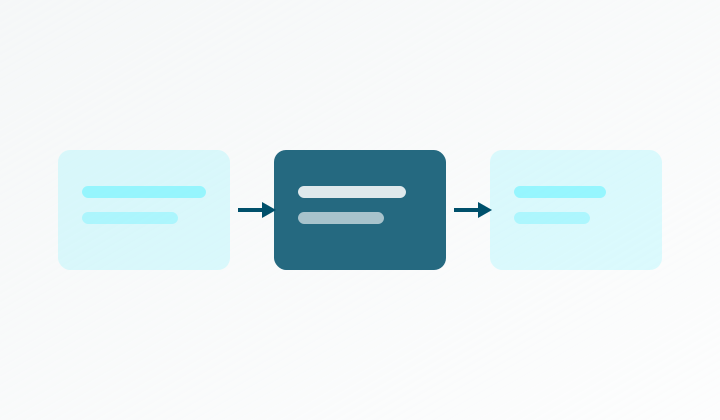
PDFs hold an information dictionary and usually an XMP packet. Producer strings, timestamps and provenance data all live there.
That layer is removable with ordinary metadata tooling, and removal is verifiable by re-reading the finished file.

The text layer is the real problem
If Claude wrote the prose, exporting it to PDF changes the container and not one word of the wording.
The statistical watermark is carried by the word choices themselves, so it survives the export completely intact. Anyone extracting the text gets the same passage with the same distribution it always had.
What actually helps
Handle the two layers separately, and in this order — the sequence matters more than it looks:
- Rewrite the prose substantially before you export
- Blend in material you wrote yourself
- Export to PDF
- Strip document metadata from the finished file
- Re-read the metadata to confirm it is gone
The flattening myth
Printing to PDF, flattening, or rasterising every page removes the extractable text, which does defeat naive copy-and-paste checks.
It does not remove the watermark from the writing. Optical character recognition reconstructs the words, and the statistical pattern comes back along with them.
It also destroys accessibility, search and text selection, which is a steep price to pay for an illusion.
Fonts and embedded assets
Embedded fonts and images carry their own metadata, and images placed into a PDF can arrive with a C2PA manifest still attached.
If the images came from Claude, strip them before placement rather than after. Removing metadata from a PDF does not reliably reach inside embedded objects.
Why order of operations matters
Every revision cycle re-stamps the document metadata, so a strip applied halfway through gets undone by the next export.
Make metadata removal the final step before the file leaves your hands. Doing it earlier means doing it repeatedly, and people forget.
What a reader can actually extract
Anyone who receives the PDF can select the text, copy it, and paste it anywhere — which means they hold the same passage you do, with the same word choices intact.
That is worth remembering when deciding how much effort the metadata layer deserves. Stripping the producer string while leaving the prose untouched addresses the one layer nobody was going to look at.
Source
The claims on this page are drawn from primary documentation and reporting rather than from other tools’ marketing copy.
Anthropic: How Claude marks AI-generated content →Related
Check what your text and files actually carry
Runs in your browser. No signup, no upload, nothing stored.